





TICKETS Season Tickets Season tickets are not valid for this fixture. All tickets are free and can be claimed here . Opening times and turnstile access The car park will open at 5:00pm The box office for ticket collection will be open from 5:30pm The Main Bar and Trevor Stevens Bar will open at 5:30pm Please note that Flasks are not permitted into the stadium Hospitality/Executive Boxes Hospitality doors for this fixture will open at 5:30pm. Junior Tickets 15-year-olds and under must be accompanied by a full-paying adult on the day of the match; otherwise, U16 ticket holders may be refused entry to the venue: turning up to the match without a full-paying adult is a safeguarding issue. Young Supporter Matchday Prices The following prices will be available for all home National League fixtures during the 2026/27 season: Under-12s: £1 with a paying adult Ages 12-15: £7.50 with a paying adult Ages 16-24: £11 All supporters wishing to purchase a ticket in one of these age categories must register for the Club’s free Young Supporters Membership Scheme. If you're aged 16 or 17, you need to be part of the Young Supporters Scheme to enter the stadium on your own; otherwise, you will not be allowed to enter the stadium unaccompanied. SAFEGUARDING RE ADMISSION: Note for reference, those supporters aged 15 and under MUST be accompanied by an adult to enter the ground, i.e. the individual must be 16 or over. Matchday Entry Supporters must present their valid membership card when entering Damson Park using a young supporter ticket. Under-12s and ages 12–15 must enter through Turnstiles 1 or 2 alongside their parent or guardian. Supporters aged 16–24 must enter through Turnstile 3. Under-16s must attend with a responsible adult (at a ratio of 2 children per one adult) and will not be permitted to enter the stadium unaccompanied. Any more than two children per one adult, please email ticketing@solihullmoorsfc.co.uk in advance to organise this request. To find out more about the admission & Young Supporters Membership: https://www.solihullmoorsfc.co.uk/solihull-moors-reduces-matchday-ticket-prices-for-young-supporters REFRESHMENTS Supporters can purchase alcohol and refreshments from the Main Bar & the Trevor Stevens Suite. GETTING HERE PARKING The Car Park is open from 5:00pm Please do not park on the Damson Parkway dual carriageway – this is a red route and parking here is strictly prohibited. Supporters will receive tickets for parking illegally, so we stress the importance of utilising the NCP Car Park and planning your journey well in advance. If fans forget to pay before leaving, they will still be able to pay via Post Pay within 24 hours of exiting the car park however this will charge them the original tariff. Failure to pay will result in a Parking Charge. To learn more, including tariffs and PostPay, please visit: https://www.birminghamairport.co.uk/parking/freeport-car-park . Any Fans using the Car park can use the code ‘MOORS26’ to receive the discounted Rate of £6 for up to 5 hours. This Code will need to be used on the Pay Machine near the exit of the Car Park. Any supporters' coaches must drop fans off at the NCP parking point, as the Damson Parkway dual carriageway is a red route. It is at the coach driver’s discretion to drop supporters off on the red route; supporters must then walk from the NCP Car Park to the stadium. Travel by Bus The X12 bus runs to the ground every 15/20 minutes from Solihull Town Centre, the NCP and Birmingham International. In night matches, this increases to every 30 minutes. Click here to view the X12 bus route, stops and full timetable . Travel by Train Solihull Railway Station is served by trains from Birmingham Moor Street and London Marylebone. The ground is situated two and a half miles away from the station in a roughly north-easterly direction. Birmingham International Station is roughly one and a half miles from the ground and is on the Euston to Birmingham New Street line. Kick It Out You can report an incident of discrimination via the Kick It Out App, which can be used on iPhone and Android devices. Phone – 0800 169 9414 Twitter - @kickitout , or by contacting the organisation’s Reporting Officers on @kickitoutreport. Solihull Moors Supporters Association Click here to find out more about the Solihull Moors Supporters Association.
Chris Millington’s Solihull Moors are set to take a break from their 2026/27 National League campaign as they take on Newcastle United’s Under 21s in their latest match of this season’s National League Cup at Damson Park. The Moors will be hoping to secure their first win in this competition this term after being beaten by Leeds’ Under 21s last time out. The most recent game for the Newcastle Under 21s, led by manager Robbie Stockdale, was in the EFL Trophy against League One outfit Bradford City at Valley Parade. They narrowly lost 2 – 1, with Matheos Ferreira scoring the only goal for the ten man Magpies, whilst Nick Powell got the goals for the hosts. In terms of their Premier League 2 campaign, their last match saw them get beaten 2 – 0 by Leeds United at the LNER Community Stadium in York. The most recent competitive victory for Newcastle’s Under 21s was actually against York City in an EFL Cup encounter at the same stadium where the Magpies won 3 – 1. As of the time of writing, Newcastle United’s Under 21s team are languishing all the way down in 30 th place in the Premier League 2 table, sitting on 0 points after three games. They have avoided being bottom of the table courtesy of Wolves’ Under 21s, who have a worse goal difference than their counterparts from the North East. As a whole, Newcastle United are a club with a significant amount of history, having been founded all the way back in 1881, though the sport of football didn’t really take off in the North East until 1890. Newcastle United are a result of a combination of two clubs. One began life being known as Stanley, though after being often confused with clubs of the same name in County Durham, they decided to change their name to Newcastle East End. The other was West End Football Club. They initially played their football at a pitch off the Great North Road, doing so in the summer of 1885, and a year later they took over the lease of St. James’ Park. 1884 had seen West End and East End Football Clubs become the area’s best football teams. Despite the fact that the English Football League was formed in April 1888, the clubs in Tyneside instead helped form a local Northern League, and in the 1889/90 season, West End Football Club ended up in second place behind Darlington St. Augustine. However, in the years that followed, West End Football Club did struggle financially, and in May 1892 East End agreed a deal to move to St. James’ Park, taking charge of what remained of West End’s defunct assets. East End were now Tyneside’s only senior football club. In a meeting in December 1892 at Bath Lane Hall, close to St. James’ Park, they concluded that they wanted to attract a wider support from the city as a whole. After several discussions, East End became how we know them today, Newcastle United, on Friday 9 th December 1892. The Magpies’ first major trophy was the First Division title in the 1904/05 season, and they did go on to win it a further three times, most recently winning it for a fourth time back in the 1926/27, when they were able to finish 5 points ahead of runners-up Huddersfield Town. They have also won the Second Division four times, doing so in 1964/65, 1992/93, 2009/10, and again in 2016/17. Newcastle have won the historic FA Cup on a number of occasions, having lifted it 6 times so far, as of the time of writing. They first won it in the 1909/10 season, following it up with wins in 1923/24, 1931/32, 1950/51, 1951/52, and most recently in 1954/55. Their 1955 FA Cup trophy win was of course at Wembley; it saw them beat Manchester City 3 – 1. Newcastle United scored through Jackie Milburn, Bobby Mitchell, and George Hannah, whilst the Cityzens scored their only goal from the boot of inside forward Bobby Johnstone. The Magpies’ only FA Charity Shield was won in 1909, with them beating Northampton Town 2 – 0 in the end. They have been runners-up to win this trophy five times in 1932, 1951, 1952, 1955, and 1996, losing to Everton, Tottenham Hotspur, Manchester United (1952 & 1996), and Chelsea respectively. Newcastle won the Texaco Cup in both 1973/74 and 1974/75, whilst also lifting the Anglo-Italian Cup back in 1973. On the European Stage, they first won the Inter-Cities Fairs Cup back in the 1968/69 season, beating Hungarian outfit Ujpest 6 – 2 over two legs. They won the first leg 3 – 0 and then the second leg was won narrowly 3 – 2. They also won the now-defunct UEFA Intertoto Cup back in 2006. The club has played in Europe several times over the years, most recently in the highly coveted UEFA Champions League last season (2025/26), reaching the Round of 16, where they lost 8 – 3 on aggregate to FC Barcelona. In the league phase, they finished in 12 th place with 14 points to their name, while beating the likes of Belgium’s Union Saint-Gilloise 4 – 0, Portugal’s Benfica 3 - 0, Spain’s Athletic Bilbao 2 – 0 ], and finally the Netherlands’ PSV Eindhoven 3 – 0. They also earned credible draws against Germany’s Bayer Leverkusen 2 – 2 and France’s Paris Saint-Germain 1 – 1. They were drawn against Azerbaijan’s Qarabag in the knockout phase play-offs. They won 6 – 1 away from home in Baku before being victorious again on Tyneside, this time winning 3 – 2 at St. James’ Park to secure a 9 – 3 victory on aggregate. Over the years, Newcastle United have spent only a few seasons outside of the Premier League, with the Magpies being one of the mainstays of the English top flight, and they have not dropped back down to the second tier since their Premier League return in 2017. They have had many famous, iconic players over the years. One of them is, of course, Alan Shearer, who is the Premier League’s all-time leading goalscorer with 260 goals, and he also has 64 assists. Shearer was part of the team that finished runners-up twice, in consecutive seasons, back in 1995/96 and in 1996/97. Last season (2025/26), Newcastle United finished in 12 th place in the Premier League, and this term (2026/27), they will hope to make their return to European Football by finishing somewhere in the top seven of the top flight of English Football. In the opposition dugout – Robbie Stockdale Robbie Stockdale has been Newcastle United Under 21s manager since his appointment back on 13 th March 2026, with the 2026/27 campaign being his first full season in charge of the Magpies’ Under 21 side. Stockdale has been in coaching before. He was joint caretaker of Grimsby Town in 2011 before being in charge of their youth team for the 2011/12 campaign. He then moved on to a similar role at Sunderland, having the job from 2012 to 2018, though he was in caretaker charge of the Black Cats on several occasions back in 2015, 2017, and 2018. He took charge of Rochdale in 2021, but left a year later in 2022 after just one season. In terms of a playing career, Robbie Stockdale played as a defender for 15 years, from 1997 until his retirement in 2012. He played for the likes of Middlesbrough (1997 - 2004), Sheffield Wednesday (Loan, 2000), West Ham United (Loan, 2003 - 2004), Rotherham United (Loan, 2004; 2004 - 2005), Hull City (2005 - 2006), Darlington (Loan, 2006), Tranmere Rovers (2006 - 2008), and finally the aforementioned Grimsby Town, who he played for, for four years between 2008 and 2012. Key Player – Vakhtang Salia Georgian footballer Vakhtang Salia, who plays as a forward, is arguably Newcastle United Under 21s’ key player, being their leading goalscorer in all competitions so far this season with as many as 3 goals in all so far. He made the move to the Magpies from Georgian giants Dinamo Tbilisi back in 2025, having agreed the deal back on 29 th October 2024. He joined Tbilisi’s academy before becoming part of their second team in 2023, before making his professional debut for the club’s senior team against Torpedo Kutaisi on 24 th November 2023. Salia then scored his first goal against the same opponents later on in the 2023/24 season on 10 th March 2024. He scored the winning goal in a 1 – 0 triumph. Opposition overview written by Adam Holt
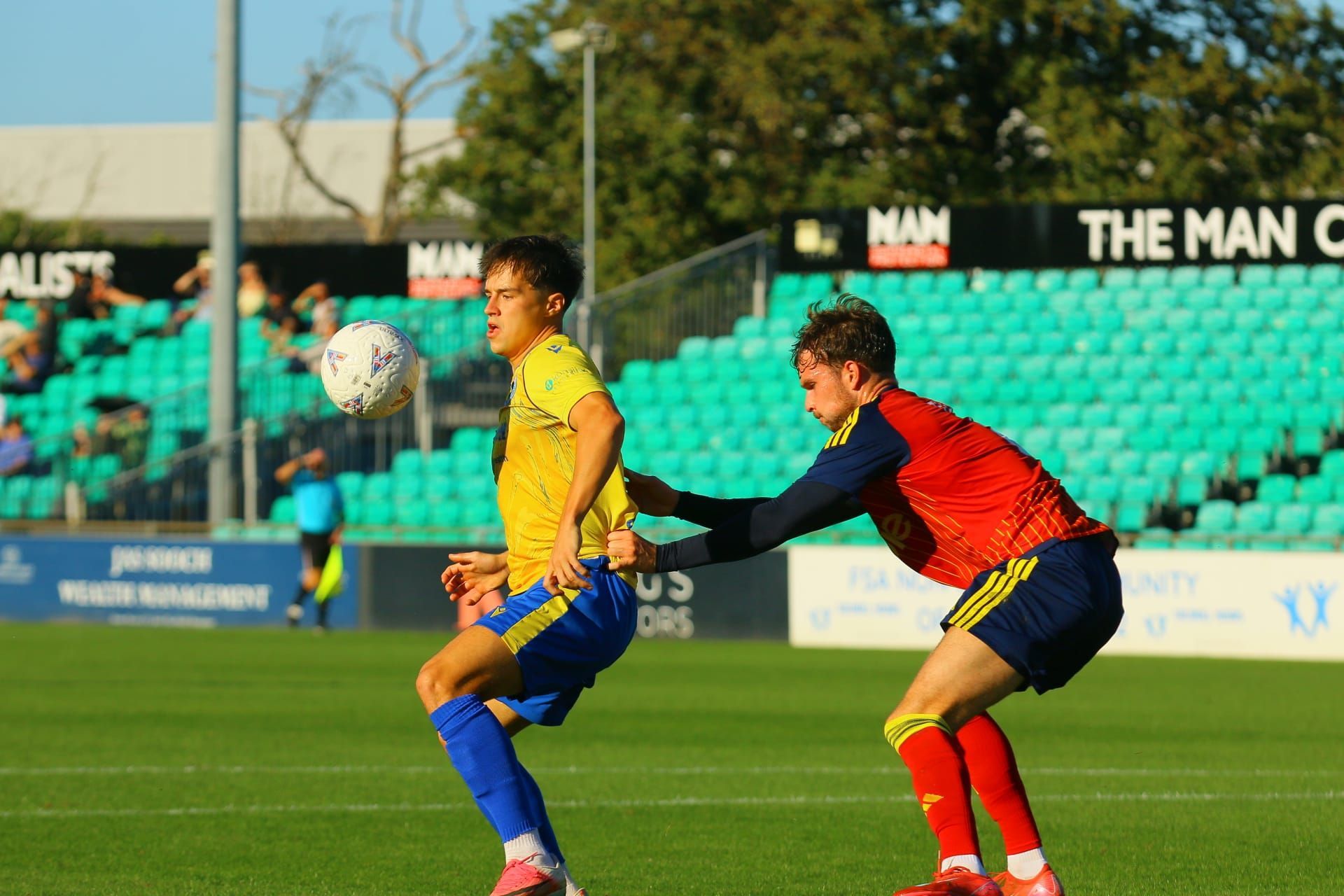
Solihull Moors were comfortably beaten 2-0 by FC Halifax at Damson Park in the Enterprise National League, as Chris Millington faced his former side. Team news Florent Hoti was given his full debut for The Moors after impressing off the bench against Woking in midweek. The midfielder came in for Ryan Woods, who went off with a knock in that game. Tyler French started his first game since returning from injury, replacing Tyrell Warren, who was serving a one-game suspension following his booking on Tuesday. Also making a welcome return from injury was Oscar Rutherford, who made a matchday squad for the first time this season, starting the game on the bench. It was a cagey start for both sides, as they struggled to keep possession for long periods. Halifax grew more into the game and had the better of the opportunities as The Moors failed to trouble the away side too much. The second half began in a similar manner, until Cruz Allen scored following a mistake in the Solihull defence. Halifax went on to score again, this time an inch-perfect free-kick from Tommy McDermott. More chances came and went for Halifax, as The Moors just couldn't find a way back into the game. The result means Chris Millington's men remain in 23rd position in the table. Kick-off Joe Sbarra had an early effort that went just wide of the post. Tommy McDermott then cut in on his left foot for the visitors, only to be denied when Jevon Mills made a cracking block. The second ball was then thundered out by the head of Chey Dunkley. With just over 10 minutes played, McDermott was again involved. A cross was played in from the left, and the Halifax winger hit the bar when unmarked at the back post. The linesman then belatedly raised his flag for offside. DISALLOWED GOAL - 16' Halifax. Another offside decision, this time the ball did end up in the back of the net, but was ruled out for the away side. Striker Conor Carty broke through and slotted past Max Metcalfe, but the celebrations were cut short when the flag went up. Cruz Allen had a powerful effort from the edge of the box blocked, before Dunkley went down with what appeared to be a thigh injury. The recent signing couldn't continue, and had to be replaced by captain Alex Whitmore. A huge let-off then followed for the home side, a sloppy pass straight to Halifax striker Carty on the edge of the penalty area was played into the box, but Scott High read the danger and cleared from near his own goal line. Another attack down the Halifax left produced arguably the best chance of the half so far. A cross was whipped in hard and low, again falling to McDermott, but the winger could only find the side netting with the goal at his mercy around 6 yards out. With Solihull been pushed further and further back, Halifax put several decent crosses into the box, Jevon Mills excellently clearing from one, before Metcalfe made two great saves. The first in particular, clawing away an effort that looked to already be past him, before a very similar one down to his right that came from a less powerful strike. Shortly after, a Halifax midfielder fired high over the bar, before McDermott curled narrowly wide, again showing the danger he posed when cutting in from the right, and onto his favoured left foot. The ball fell the nicely to Carty, who couldn't get enough on his shot inside the box, and the ball was caught comfortably by Metcalfe. In a rare Moors attack, Tyler French found himself in space on the right-hand side of the box, his cross falling just short of Wakeling who was ready to pounce. On 40 minutes, whilst trying to prevent a throw-in, Halifax's Ben Tollitt took a tumble over the advertising boards and had a seat with the away fans, giving himself a brief rest after all of his hard work in the first-half. In the 2nd minute of injury time at the end of the half, defender Alex Bardell's effort from a corner was well dealt with by Metcalfe, who palmed away his close-range header to keep the scores level at the break. Half time - 0-0 Second half An attacking substitution by Chris Millington for the start of the second half saw winger Junior Tiensia come on to replace defender Carter Pinnington. A great Jamie Andrews tackle to stop a Halifax break, set the Moors on an attack of their own, Wakeling did well with little support and won a corner. Solihull rode their luck again as Halifax somehow couldn't manage to convert a ball that was whipped in with pace, straight across the 6-yard box. The away side won a free-kick in a worrying position for The Moors, Tollitt curled low, and forced a great save from Metcalfe. The ball was recycled and then fell back to the feet of Tollitt again, who this time dragged wide from 20 yards. GOAL - 55' Halifax. A mix up in The Moors defence allowed Cruz Allen an unchallenged run through on goal and he placed calmly past Metcalfe to break the deadlock for the away side. 0-1. The Moors, trying to respond to the setback, went on an attack that ended with a French cross falling to the feet of Jacob Wakeling. The strikers hooked effort going just wide of the near post. GOAL - 60' Halifax. The visitors won a free-kick on the edge of the box when McDermott was bundled over. It was McDermott himself who stepped up to take the resulting set-piece, sending a beautiful, curling effort into the top corner with his left foot, leaving Metcalfe with no chance. 0-2. The Shaymen almost scored a third, with Carty hitting the crossbar, before Mills cleared the danger before a Halifax attacker could respond. Scott High then had a half-chance that he couldn't keep down, firing over from the edge of the box. Wakeling found some space to run into and broke through on the left, smashing his effort straight at Halifax keeper True Grant. Manager Chris Millington made a double substitution with just over 20 minutes left to play, bringing on Oscar Rutherford and Rio Shipston for Florent Hoti and Matty Carson, in an attempt to find a way back into the game. With Halifax looking increasingly dangerous, another chance went begging, this time Conor Carty diverted a cross towards goal, but Metcalfe was there again The dangerous McDermott curled over 20 yards after finding space on the right again. Substitute Rutherford, making his 150th appearance for the Enterprise National League, was looking lively on the right wing, and some nice link-up play with French put him through on the right, Rutherford's cross fell to High, who's shot was well blocked. Another burst down the wing by Rutherford followed, with our returning number 21 putting a good cross into the head of Wakeling, who could only head over. The final minutes fizzled out, with Halifax happy to see out the game and take home the 3 points, which moved them up to 13th in the table, and The Moors struggling to create any clear-cut chances. Full-time - Solihull Moors 0-2 FC Halifax. Attendance 966 (including 149 travelling fans) Moors fans, thank you for your continued support and backing of the boys in this tough period. We look forward to seeing you soon. We hope you have a safe journey home. COYM💛💙 Next up We host Newcastle U21's in the National League Cup on Tuesday 6th October at Damson Park. Kick-off 7pm. Tickets for this fixture are free, but need to be claimed using the link below - https://solihullmoorsfc.ticketco.events/uk/en/e/solihull_moors_v_newcastle_national_league_cup?version=m We're back in league action on Saturday 10th October as we face Worthing at the Sussex Transport Community Stadium. Kick-off 3pm. Travelling supporters can purchase coach tickets below - https://solihullmoorsfc.ticketco.events/uk/en/e/worthing_away_coach_travel_2627?version=m
Solihull Moors host Halifax Town at Damson Park on Saturday. The Moors come off an emphatic 4-2 away win at Woking midweek, while Halifax were held to a 1-1 home draw with Boston on Tuesday. Andy’s Bet Club are on hand to preview all our key games for the 2026/27 season. Their site is packed with free football tips that are updated daily with expert insight. Match Preview Solihull Moors head into this fixture off the back of a 4-2 win away at Woking, in a game where they scored with every shot on target they had. Goals from Jacob Wakeling, Scott High, and a Jamie Andrews brace were enough to hand the Moors their second win of the season. Halifax were held to a 1-1 draw last time out against Boston in a game where they were comfortably the better side. Conor Carty scored Halifax’s only goal of the game after Lennon Wheeldon gave the visitors the lead in the 30th minute. Solihull’s result means they have closed the gap between themselves and getting out of the bottom four, whilst Halifax sit 15th after three league games without a win. Solihull Moors Form Guide Solihull’s 4-2 win at Woking came from just 0.61 xG to Woking’s 1.88. The Moors had eight shots with four on target, meaning Chris Millington’s side scored with every shot on target they had. Jacob Wakeling, Scott High, and Jamie Andrews all got on the scoresheet in a game where the first half saw five goals. This was the Moors' first league away win of the season, and a win on Saturday to see them on the cusp of leaping out of the drop zone after two wins in their last four league games. Halifax Town Form Guide Halifax racked up 2.11 xG in their 1-1 draw against Boston, in a game where they had a whopping 12 shots on target. They also had 57% possession, but went behind after Lennon Wheeldon gave Boston the lead. Chris Carty then equalised for Halifax with a chance worth only 0.08 xG. Ben Tollitt had the best chance of the game for Halifax with a chance worth 0.23 xG. Tactical Insight Solihull will need to replicate their shooting efficiency if they are to get a result against Halifax here. Halifax were left frustrated, having 18 shots with 12 on target against Boston and limiting their opponents to just 0.79 xG. The likes of Jacob Walking have been a constant attacking threat for the Moors this season, and despite their position in the league, have shown tendencies to post impressive xG stats in games. The Woking game was a sign that Solihull can take their chances. If they are as efficient against Halifax as they were against Woking, Chris Millington’s side could see this as a chance to get a run going. Conclusion Win on Saturday and Solihull will be on the cusp of breaking out of the bottom four. Halifax are winless in three, and a big away win couldn’t have come at a better time for Solihull. Visit Andy’s Bet Club for daily free betting tips and free betting offers from the top UK-licensed bookmakers.
Chris Millington and his Solihull Moors team are facing an FC Halifax Town side led by their current Head Coach John McGrath at Damson Park in their latest game of the 2026/27 Enterprise National League season. A victory for The Moors would see them build momentum whilst also climbing up the fifth tier table. The Shaymen, who are the former club of Premier League winner Jamie Vardy, find themselves around the midtable region of the league table, and they know that a win would see them make ground on those above them. Millington’s side will, of course, have ambitions to prevent their opponents from securing all three crucial points. FC Halifax Town is, of course, a phoenix club. The original club was called Halifax Town Association Football Club, who were formed all the way back on 24 th May 1911. Formed at the Saddle Hotel, they played their football in the Yorkshire Combination and the Midland League before then becoming one of the founding members of the Football League Third Division North in 1921. They remained there until 1958, which was when there was a league restructuring, and subsequently they became members of the Football League Third Division. We will now fast forward to the 1970/71 season; they finished third, which was one place below promotion from the Football League Third Division. However, then in 1971/72, they were only just able to avoid relegation, doing so on goal difference after Rotherham United had lost on the final day of the season against Tranmere Rovers. However, in 1976, they were relegated down to Division Four. Then in 1993, they were relegated once again, this time to the Football Conference ahead of the following season, the 1993/94 campaign. In 1996/97, they avoided relegation under returning boss George Mullhall, which came after they had a few poor seasons and some financial problems. Then in the 1997/98 season, they had a superb campaign, winning the league title with the likes of Jamie Paterson, Mark Bradshaw, and Lee Martin in the squad. Their top goalscorer was Geoff Horsfield, who was able to find the back of the net on several occasions, with him scoring as many as 30 goals in the end. Chris Wilder was the boss when the club found themselves in the Conference again in the 2001/02 season, and in their first season back, they finished in 8 th place. In 2005/06, they finished in 4 th , but could not get promotion by losing to Hereford United in the Conference League Play-Off Final. Fast forward to 2007, The Shaymen found themselves in financial trouble again and were placed into administration by a local consortium. And, despite being deducted 10 points, they still survived relegation. They were still wound up after an appeal. Then in May 2008, things got worse for Halifax when they, following a major error, owed more than £800,000 to HMRC, with the club now more than £2 million in the red. They would cease to exist. It was also in 2008 that the phoenix club, FC Halifax Town, was formed who Solihull Moors will soon be facing once more. They were accepted to play in the Northern Premier League Division One North for the 2008/09 season. Neil Aspin was appointed manager in April 2009, and in his first season in charge, 2009/10, they had what turned out to be a very successful campaign, winning the league after amassing 100 points whilst scoring as many as 108 goals as a team in the process. In the 2010/11 season, they found themselves in the Northern Premier League, the seventh tier of English Football. This was the season when they signed Leicester City legend and former England international Jamie Vardy. They got automatic promotion to the Conference North after beating Retford United 2 – 0, also securing them the league title. Vardy then left for Fleetwood Town in the early stages of the 2011/12 season, finishing third before then losing in the playoffs to Gainsborough Trinity 3 – 2 on aggregate. Promotion to the National League was sealed in 2012/13 when, after finishing in 5 th place, they beat local side Guiseley 3 – 1 on aggregate in the playoff semi-finals before then going on to get the better of Brackley Town in the final, with the solitary goal to win the game 1 – 0 coming from striker Lee Gregory. The fifth tier was now, and still is, the highest level that FC Halifax Town has ever been, and in their first season at this level, they got all the way to the promotion playoffs semi-final, where they would lose 2 – 1 to Cambridge United. Fast forward to 2015/16, and it saw them get relegated down to the sixth tier despite the best efforts of former North Ferriby United manager Billy Heath. They were able to make an immediate return to the National League after a third place finish in 2016/17, beating Chorley 2 – 1 after extra time in the final, after having beaten Salford City 3 – 0 on penalties in the semi-finals after the scoreline was level at 1 – 1 after extra time. It was in 2018 when FC Halifax Town became full time, with Pete Wild taking over from former boss Jamie Fullarton. They lost out in the playoffs semi finals 2 – 1 to Boreham Wood in 2018/19 before a 10 th place finish the following season. The 2021/22 season was a great one for Halifax, who were able to achieve their highest ever position in the English Football Pyramid since their formation back in May 2008. They were able to finish in 4 th place, getting into the playoffs where they lost 2 – 1 at home to Chesterfield. Shortly after, Pete Wild left the club for League Two side Barrow, with Wild being replaced by the current Solihull Moors boss Chris Millington. The club reached the National League playoffs again in the 2023/24 season when they finished in 7 th place, losing 4 – 2 to the aforementioned Solihull Moors. They were then eliminated again the next season, this time losing 4 – 0 to Oldham Athletic in 2024/25. Then in June 2025, Adam Lakeland took charge as their new manager before then leaving back in April 2026, when he took charge of Morecambe after finishing in 8 th place. Current boss John McGrath was then announced as his successor in May 2026. In 2026/27, McGrath’s Shaymen will be hoping to finish in the top half, and maybe finish in the playoffs once again. In the opposition dugout – John McGrath Current Halifax boss John McGrath has been in charge ever since he took over back on 19 th May 2026, replacing Adam Lakeland in the Shaymen dugout. Before joining the team, he was in charge of National League club Buxton, where he was in charge for two years between May 2024 and May 2026, when he left for FC Halifax Town. Before that stint with Buxton, he was in charge of Mickleover, which was his first job in senior club management. He was with them for as many as 8 years, from 2016 to 2024, when he left for the aforementioned Buxton FC. McGrath also had a playing career that lasted for more than 20 years, 21 years to be exact, from 2001 to 2022. He represented the likes of Aston Villa (2001 - 2003), Dagenham & Redbridge (Loan, 2002 - 2003), Doncaster Rovers (2003 - 2005), Shrewsbury Town (Loan, 2004), Kidderminster Harriers (2005), Limerick (2005), Weymouth (2006), Tamworth (2006 - 2007), Burton Albion (2007 - 2013), York City (Loan, 2013), Alfreton Town (2013 - 2014), and finally the aforementioned Mickleover from 2015 to his retirement in 2022. Key Player – Zak Gilsenan Halifax’s key player is arguably wide forward Zak Gilsenan, with the 23 year old being their joint top goal scorer this season so far with 3, tied with Ben Tollitt. Gilsenan is a new signing for The Shaymen, having joined from Grimsby Town back on 6 th July 2026, signing a one year deal with an option of an additional year. Other clubs that Gilsenan has played for include the likes of Blackburn Rovers (2023 - 2025), the aforementioned Grimsby Town (2025 - 2026), Buxton (Loan, 2026), Gateshead (Loan, 2026), and, of course, current club Halifax Town, from July 2026. Gilsenan has also spent time as a youth player for the likes of Carramar Cougars, Sorrento (leaving in 2011), Perth Glory (2011 - 2012), FC Barcelona (2012 – 2014), Liverpool (2014 - 2019), and finally Blackburn in 2019, being promoted to their senior team back in 2023.
TICKETS Season Tickets Season tickets are valid for this fixture. All tickets can be purchased here . Opening times and turnstile access The car park will open at 12:00pm The box office for ticket collection will be open from 1:00pm The Main Bar and Trevor Stevens Bar will open at 1:00pm Please note that Flasks are not permitted into the stadium Hospitality/Executive Boxes Hospitality doors for this fixture will open at 12:30pm. Junior Tickets 15-year-olds and under must be accompanied by a full-paying adult on the day of the match; otherwise, U16 ticket holders may be refused entry to the venue: turning up to the match without a full-paying adult is a safeguarding issue. Young Supporter Matchday Prices The following prices will be available for all home National League fixtures during the 2026/27 season: Under-12s: £1 with a paying adult Ages 12-15: £7.50 with a paying adult Ages 16-24: £11 All supporters wishing to purchase a ticket in one of these age categories must register for the Club’s free Young Supporters Membership Scheme. If you're aged 16 or 17, you need to be part of the Young Supporters Scheme to enter the stadium on your own; otherwise, you will not be allowed to enter the stadium unaccompanied. SAFEGUARDING RE ADMISSION: Note for reference, those supporters aged 15 and under MUST be accompanied by an adult to enter the ground, i.e. the individual must be 16 or over. Matchday Entry Supporters must present their valid membership card when entering Damson Park using a young supporter ticket. Under-12s and ages 12–15 must enter through Turnstiles 1 or 2 alongside their parent or guardian. Supporters aged 16–24 must enter through Turnstile 3. Under-16s must attend with a responsible adult (at a ratio of 2 children per one adult) and will not be permitted to enter the stadium unaccompanied. Any more than two children per one adult, please email ticketing@solihullmoorsfc.co.uk in advance to organise this request. To find out more about the admission & Young Supporters Membership: https://www.solihullmoorsfc.co.uk/solihull-moors-reduces-matchday-ticket-prices-for-young-supporters REFRESHMENTS Supporters can purchase alcohol and refreshments from the Main Bar, the Trevor Stevens Suite and Forest Bar (away fans only) There will be food available at: Hot Food Bar in the old reception Terry's Burger Van Spud van GETTING HERE PARKING The Car Park is open from 12:00pm Please do not park on the Damson Parkway dual carriageway – this is a red route and parking here is strictly prohibited. Supporters will receive tickets for parking illegally, so we stress the importance of utilising the NCP Car Park and planning your journey well in advance. If fans forget to pay before leaving, they will still be able to pay via Post Pay within 24 hours of exiting the car park however this will charge them the original tariff. Failure to pay will result in a Parking Charge. To learn more, including tariffs and PostPay, please visit: https://www.birminghamairport.co.uk/parking/freeport-car-park . Any Fans using the Car park can use the code ‘MOORS26’ to receive the discounted Rate of £6 for up to 5 hours. This Code will need to be used on the Pay Machine near the exit of the Car Park. Any supporters' coaches must drop fans off at the NCP parking point, as the Damson Parkway dual carriageway is a red route. It is at the coach driver’s discretion to drop supporters off on the red route; supporters must then walk from the NCP Car Park to the stadium. Travel by Bus The X12 bus runs to the ground every 15/20 minutes from Solihull Town Centre, the NCP and Birmingham International. In night matches, this increases to every 30 minutes. Click here to view the X12 bus route, stops and full timetable . Travel by Train Solihull Railway Station is served by trains from Birmingham Moor Street and London Marylebone. The ground is situated two and a half miles away from the station in a roughly north-easterly direction. Birmingham International Station is roughly one and a half miles from the ground and is on the Euston to Birmingham New Street line. Programme The programme can be downloaded from here . Kick It Out You can report an incident of discrimination via the Kick It Out App, which can be used on iPhone and Android devices. Phone – 0800 169 9414 Twitter - @kickitout , or by contacting the organisation’s Reporting Officers on @kickitoutreport. Solihull Moors Supporters Association Click here to find out more about the Solihull Moors Supporters Association.

A superb performance by Solihull Moors secured a 4-2 victory against Woking at the Laithwaite Community Stadium on Tuesday night in the National League. Two new signings were announced before kick-off, with defensive duo Chey Dunkley, and Carter Pinnington both making their debut for The Moors. Jacob Wakeling opened the scoring for Solihull, only to see his side pegged back with a fine finish from Matt Ward. John Marquis then put Woking ahead, before Jamie Andrews equalised from 20 yards with his first goal for The Moors. Scott High then curled in an exquisite finish from outside the box to send the away side in 3-2 ahead, at the end of a roller coaster first half. The second half was a much tighter affair, with Woking having defender Jaiden Putman sent off on 56 minutes, before another wonderful Andrews strike sealed the game and sent Chris Millington's men home with a huge 3 points. Kick-off A bright start to the first 45 by both sides was a sign of things to come, with Woking and Solihull testing each other's defence early on. GOAL - 6' Moors. A flicked ball by Carson was misread by Steven Turner, and fell to Scott High, who took full advantage by playing an inch-perfect pass into Wakeling, who's left-footed shot from a tight angle was too powerful for Woking goalkeeper Will Jaaskelainen, with the ball going under his body at the near post. 0-1 Down the other end, new signing Chey Dunkley was already showing exactly why he was brought to the club. His first two significant moments were a sliding block to deny a tap in, and then deflecting Ward's follow-up strike just over the bar as Woking pushed for an equaliser. Woking striker John Marquis, who looked a threat from the beginning, was almost put through on goal, but Moors keeper Metcalfe was alert to the danger, beating the Woking man to the ball on a couple of occasions. Another dangerous Woking attack followed, with Shadrach Ogie steaming down the left wing, only to see his cross blocked by the impressive Dunkley. GOAL - 23' Woking. Roy Syla won the ball in the middle for the home team, then sent Ward through on the right-hand side of the box, the Woking man found himself with time to take a couple of touches, before unleashing a thunderous, swerving shot past Metcalfe. 1-1 Immediately after the goal, High broke down the right, but his cross was just short of the on rushing Wakeling. GOAL - 25' Woking. Turner fed a ball into Kelly, which he brilliantly chipped through to Marquis, who's scuffed shot was beyond the reach of Metcalfe. 2-1 GOAL - 27' Moors. From the resulting kick-off, Millington's side put together a wonderful team move that saw almost 20 passes without the home side getting a touch of the ball. It ended up with the tenacious Andrews driving through to the edge of the box before unleashing a screamer from around 20 yards. 2-2 A penalty shout followed for Woking after some brave goalkeeping from Metcalfe again, who was quickest as Ward raced through on goal. Metcalfe came sliding out to get a vital touch, before Dunkley cleared the danger. Both players then stayed down and required treatment before play could continue. GOAL - 45' Moors. Just a couple of minutes after coming on for Ryan Woods, Florent Hoti won the ball, which then fell to Wakeling, who found High on the edge of the area, and The Moors midfielder whipped a sensational left-footed strike into the far corner to put the Midlands side into the lead again. 2-3 Second half Woking won a corner seconds into the second half, with Tyrell Warren doing well to head the ball out and away from danger. Half time sub Aiden O'Brien's header from the corner was just over the bar. With Woking searching for a goal, Warren again got a good block in, and Pinnington, also did well to get his foot in ahead of the home sides attackers a couple of times as The Moors held on, before Putman, out on the left, then cut in and had a decent effort at goal, but Metcalfe was well positioned to catch the shot. RED CARD - 56' Woking. While trying to dispossess Jaiden Putman, the Woking defender went down under a challenge by Joe Sbarra, Putman then appeared to strike The Moors midfielder, and referee Jason Richardson issued a straight red card. A huge blow for Jake Hyde's side, after starting the second half on the front foot. Sbarra received a yellow card for the initial foul. O'Brien and Shadrach Ogie looked lively for Woking, O'Brien's trickery and Ogie's pace were a constant threat. The two combined to create a chance for sealer on the edge of the box, his shot deflecting safely into the arms of Metcalfe. Defender Tyler French made a welcome. return from a long injury lay-off, replacing new-boy Pinnington who was solid and assured on his Moors debut. GOAL - 77' Moors. Some great determination again by Hoti to win possession in the middle of the park, who then played a one-two with Wakeling, before having an effort blocked. The ball then fell nicely to Matty Carson, who rolled across to Andrews, and the midfield man calmly slotted into the back of Jaaskelainen's net to score his second of the game against his former side. Andrews, looking for a hat-trick, tried his luck from distance, but the strike was deflected wide for a corner. From the corner, Jevon Mills saw a header go just wide of the post. Another chance for the Moors to score a fifth followed, Hoti and fellow sub Junior Tiensia combined on the edge of the box, with the latter whipping in a low cross that Wakeling was agonisingly close to getting a touch on. Although the striker may possibly have been flagged for offside had the ball ended up in the net. Another substitute, Rio Shipston then tried his luck from long range after a fast Moors break. Woking continued to huff and puff, but ultimately found the Solihull defence, and Metcalfe, too difficult to crack. The Moors keeper brilliantly tipped a powerful Harrison Sohna's drive onto the post in injury time, before Marquis had an effort trickle inches wide as Millington's side held on for a valuable win on the road. Full time - Woking 2-4 Solihull Moors. Man of the match - Jamie Andrews. All in all, a terrific result and performance away from home against a tough Woking team, who only a few days ago put 5 goals past Carlisle. Hopefully the result can provide a platform to build on, as Chris Millington and his squad aim to climb our way back up the table. A massive thank you to each and every one of the 35 fans that travelled to Woking. The level of commitment to make a 230+ mile round trip for our club midweek is impeccable. Hopefully those 3 points made it worthwhile, and you have a safe journey home💛💙 Next up Another home double header as Damson Park plays host to FC Halifax on Saturday 3rd October, 3pm kick-off in the Enterprise National League, followed by a National League Cup tie against Newcastle U21's on Tuesday 6th October, 7pm kick-off. Tickets for FC Halifax can be purchased on the link below - https://solihullmoorsfc.ticketco.events/uk/en/e/solihull_moors_v_fc_halifax_town2627?version=m COYM💛💙 Written by Scott Cattell

Football is so much more than ninety minutes on a pitch. It’s about belonging, finding your voice, and discovering that your physical boundaries don't define your potential. When my son Ted first joined the Solihull Moors Foundation Ability Counts sessions at five years old, the world was navigating the height of COVID-19. Ted lives with hemiplegia, a form of Cerebral Palsy that affects half of his body. Finding an environment where he was not only accommodated, but truly understood and encouraged, was vital. Six years later, Ted has just turned 11, and looking back on his journey with Solihull Moors shows how transformative inclusive sport can be. More Than Just a Game: Confidence, Community, and Community Spirit Over the last six years, Ted’s weekly sessions with Moors haven't just developed his footballing skills—they have reshaped his confidence. Through continuous training sessions and local tournaments, he has built lasting friendships with teammates who understand the unique challenges and triumphs of living with a disability. The inclusive, uplifting culture at Solihull Moors provided Ted with a safe space to test his limits, fall in love with the game, and dream big. A Spark Lit at the CP Euros The pivotal moment in Ted's journey came last year at the CP Euros. Watching elite players with Cerebral Palsy compete at the highest level, and meeting the England national team in person, showed Ted exactly what was possible. Inspired by seeing athletes like him represent their country, Ted took a huge step: trialling for the England Para-Pathway. Thanks to the strong foundation he built at Moors, Ted was accepted onto the scheme. Today, he trains at the regional Para-Pathway hub at Aston Villa’s indoor facility, working hard every week toward his ultimate goal: one day putting on the England shirt and representing his country. A Heartfelt Thanks to Solihull Moors Foundation None of this would have been possible without the unwavering commitment, care, and belief of everyone involved with the Solihull Moors Foundation. Special recognition must go to Scott Langford. Scott’s dedication, patience, and ability to see the potential in every child who walks onto the pitch have been instrumental in Ted's growth, both as a player and as a young boy. Coaches like Scott don't just teach football; they change lives. Get Involved: Give Your Child the Chance to Play. If you are a parent of a child with a physical disability, neurodivergence, or additional needs, know that there is a place where your child can thrive. The Solihull Moors Foundation Ability. Counts sessions offer an inclusive, supportive, joyful environment where every player can shine. Ted’s journey started with a single session at five years old. Today, he’s chasing his dream of playing for England.
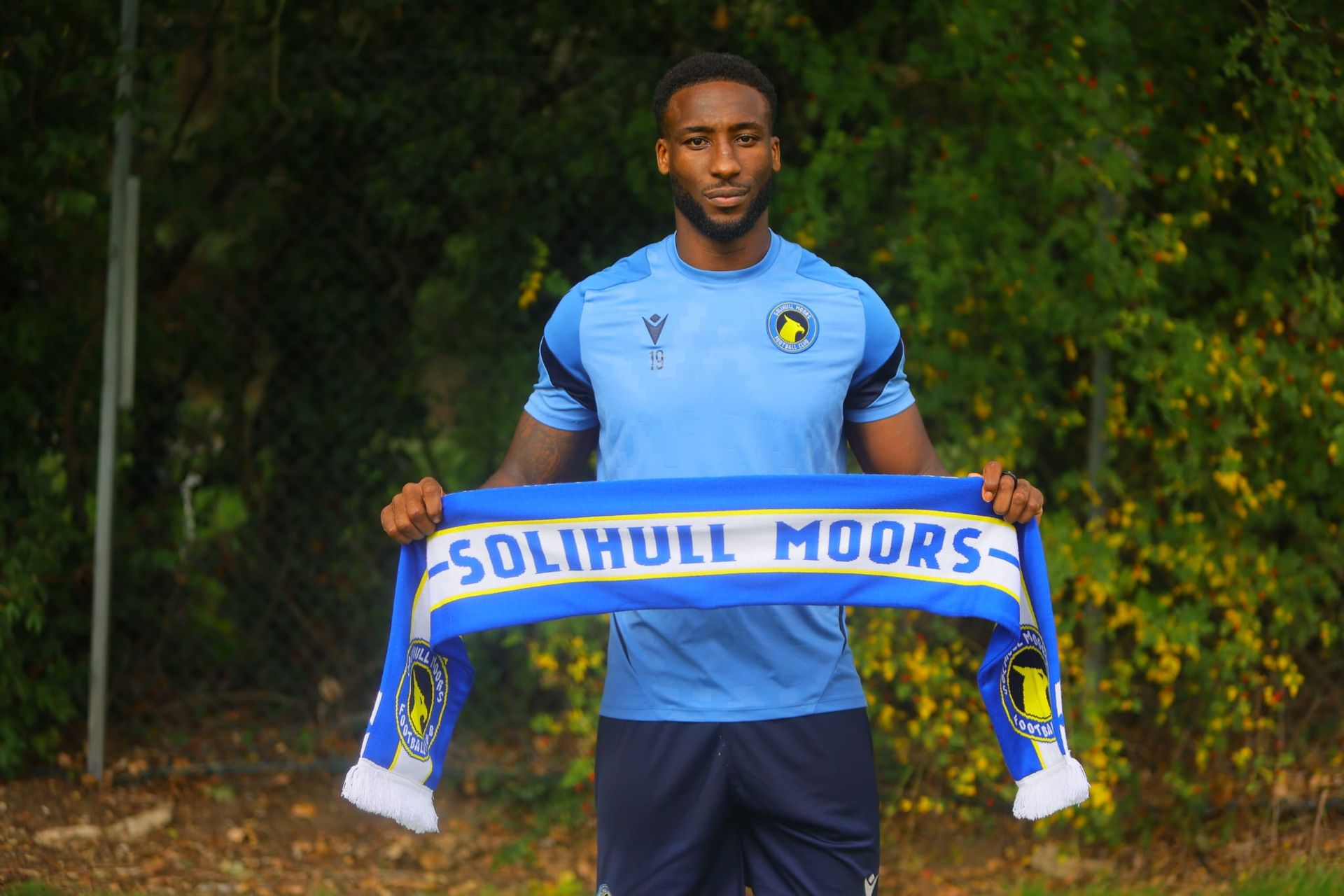
Solihull Moors are delighted to announce the signing of experienced defender Chey Dunkley on loan from Chesterfield until 26th December. The 34-year-old centre-back arrives at Damson Park with more than 400 senior appearances across the EFL and Non-League game. Born in Wolverhampton, Dunkley began his career within Crewe Alexandra’s Academy before gaining senior experience with Hednesford Town and Kidderminster Harriers. His performances earned him a move to Oxford United, where he made 78 appearances and helped the club secure promotion to League One during the 2015/16 season. Dunkley later joined Wigan Athletic and played a key role as the Latics won the League One title in 2017/18. He made more than 100 appearances during his three seasons at the club before going on to represent Sheffield Wednesday and Shrewsbury Town. The 6ft 2in defender joined Chesterfield following two seasons with Shrewsbury and brings extensive experience, leadership and a considerable goal threat from defence, having scored more than 40 times during his senior career. Speaking about his arrival, Moors boss Chris Millington said: “ Chey brings a huge amount of experience and leadership to the group. He’s a commanding defender who will give us real strength at the back, and we’re delighted to have him with us.” Welcome to the Moors, Chey! 💛💙 The deal is subject to the relevant league and FA clearances.
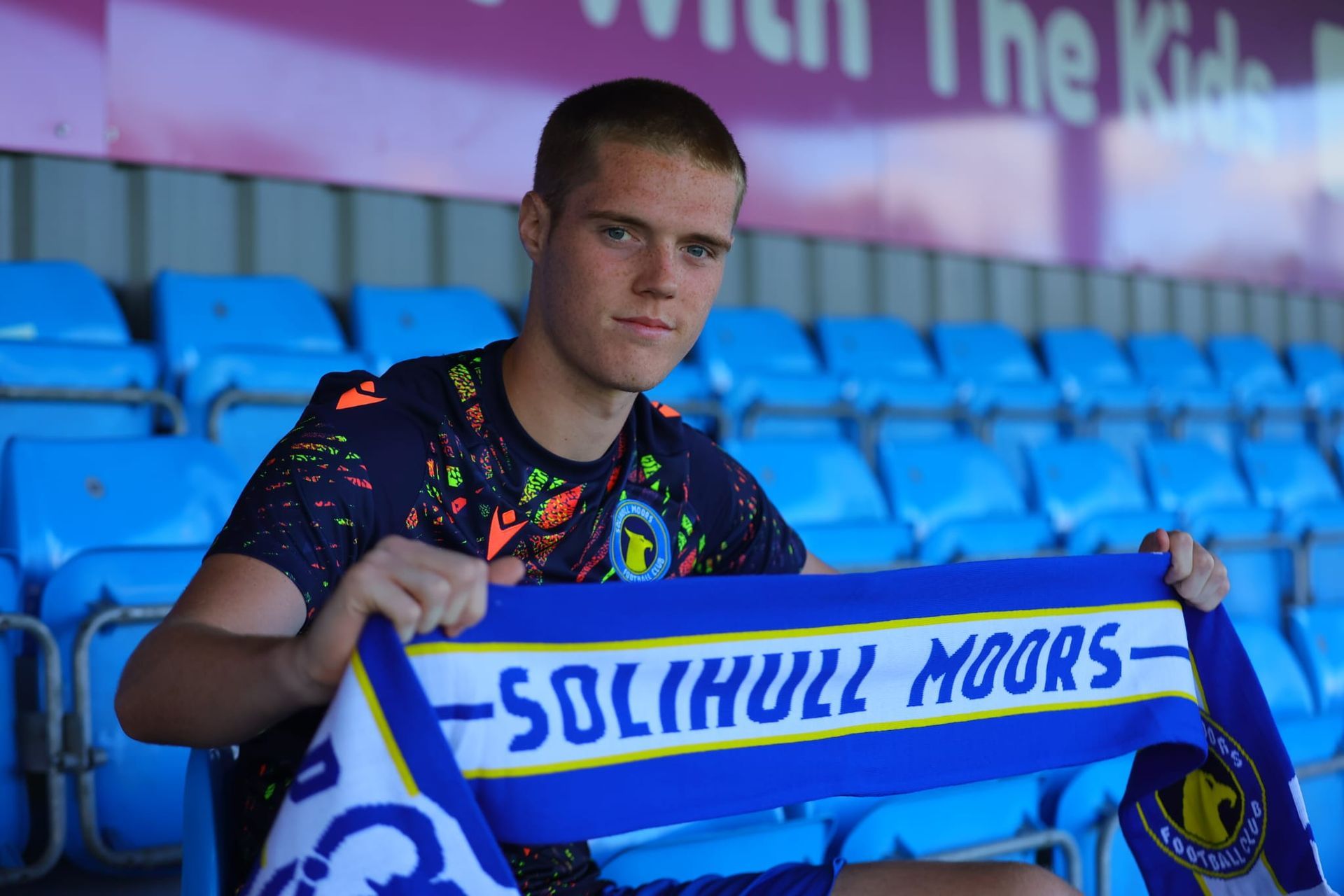
Solihull Moors are delighted to announce the signing of defender Carter Pinnington on loan from West Bromwich Albion until December 26th. The 19-year-old centre-back arrives at Damson Park having joined the Baggies from Liverpool on a three-year deal ahead of the 2026/27 campaign. Pinnington progressed through Liverpool’s Academy after joining the club at Under-7 level and went on to represent the Reds across several age groups. The commanding defender made 19 Premier League 2 appearances for Liverpool’s Under-21s during the 2025/26 season, while also gaining experience in the UEFA Youth League and EFL Trophy. Pinnington was also included in Liverpool’s senior squad for their Carabao Cup fixture against Crystal Palace in 2025 and has represented England at youth international level. Speaking about his arrival, first-team manager Chris Millington said: “Carter is a talented young defender who has developed within an excellent academy environment. He gives us another strong option at the back, and we’re looking forward to working with him during his time at the Club.” Welcome to the Moors, Carter! 💛💙 The deal is subject to the relevant league and FA clearances.